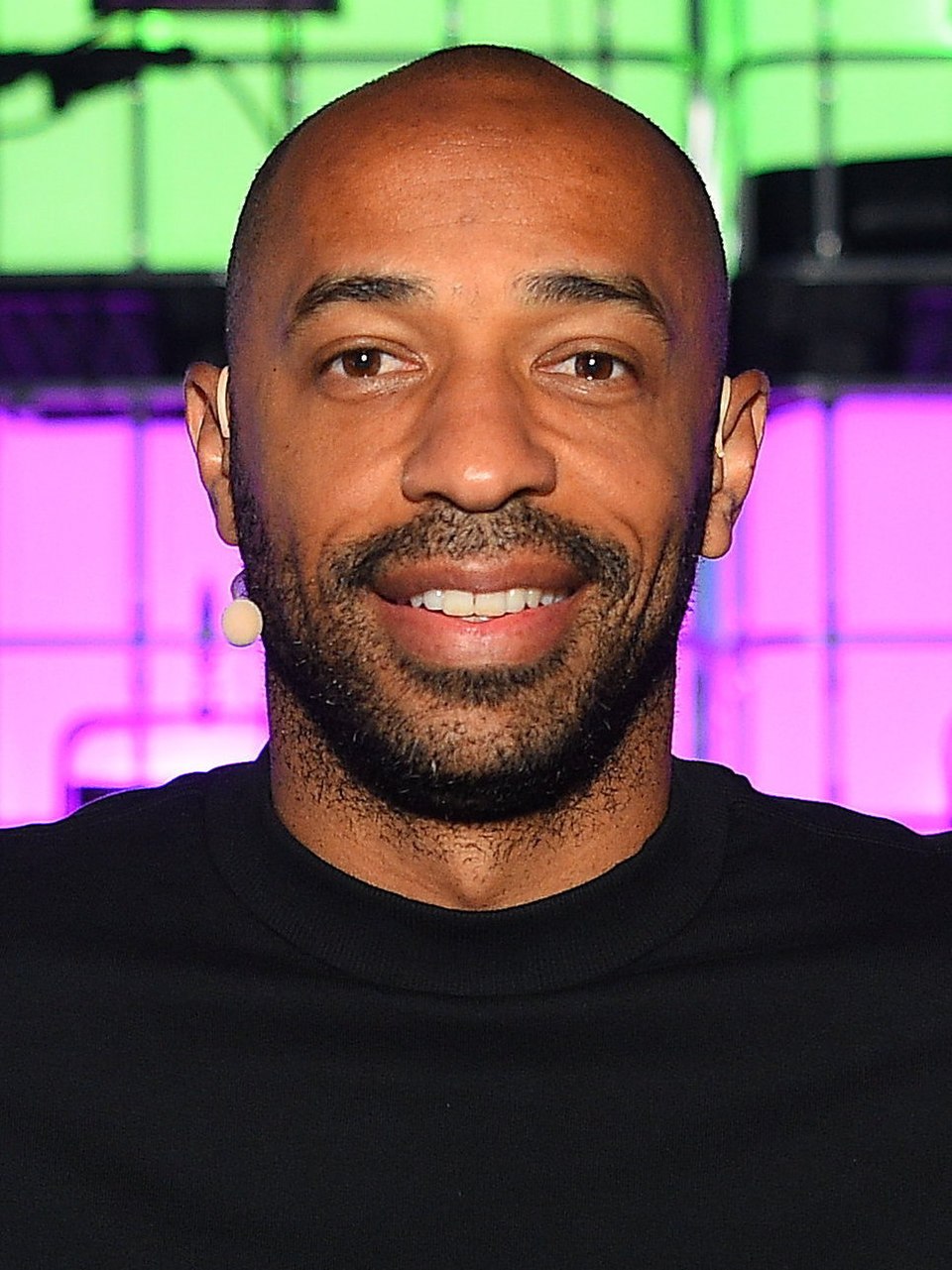
Thierry Henry: Unveiling His Player and Coach Career Stats
Thierry Henry. The name alone conjures images of blistering pace, elegant finishes, and an almost effortless mastery of the beautiful game. Born on August 17, 1977, near Paris in Les Ulis, Thierry Daniel Henry embarked on a football journey that would see him redefine the role of a modern striker and eventually transition into the intricate world of coaching. From his formative years influenced by a devoted father to his legendary status as an Arsenal icon and World Cup winner, Henry’s career has been a testament to talent, perseverance, and strategic evolution. This article delves deep into the key statistics and pivotal moments that shaped both his playing and coaching odysseys.
The Formative Years: From Les Ulis to Monaco's Rising Star
Thierry Henry’s path to football superstardom was anything but conventional, marked by unwavering paternal support and an early display of raw talent. His father, Antoine Henry, a Guadeloupean immigrant, was the driving force behind young Thierry’s ambition, navigating challenges like a congenital foot malformation and the emotional turbulence of his parents' divorce in 1985. Antoine's dedication was legendary; he famously lost a job due to consistently prioritizing his son's training, a sacrifice that underscored his belief in Thierry's potential. Early coaches, like Claude Chezel, often remarked on the boy's inherent flaws paling in comparison to the ambition and persistence instilled by Henry Sr.
Henry honed his skills in youth teams such as Yulys, Palaiseau, and Viry-Chatillon before securing a place at the prestigious Clairefontaine national football academy. It was here, during a match where he netted an astounding six goals, that he caught the eye of Arnold Catalano, Monaco’s manager, earning him an invitation to their reserve squad. At just 17, Henry joined AS Monaco, marking the true beginning of his professional career.
His five seasons with the Principality club (1994-1999) proved to be a critical developmental phase. Crucially, it was under the guidance of then-Monaco manager Arsène Wenger that Henry’s position on the pitch would be revolutionized. Wenger, recognizing Henry’s speed, agility, and keen eye for goal, famously transitioned him from a left-winger or attacking midfielder into a central striker – a decision that would reshape football history. At Monaco, Henry celebrated a national championship title and a Coupe de France victory, also reaching the semi-finals of the UEFA Champions League, where they narrowly missed out against Alex Ferguson's formidable Manchester United. This period, though sometimes overlooked in favor of his later exploits, laid the essential groundwork for the legend he would become. His early stats, while not numerically overwhelming, showed glimpses of the prolific scorer he was destined to be, establishing his presence as a top-tier prospect in European football.
Ascending to Legend: Thierry Henry's Illustrious Playing Career
After a brief and challenging stint at Juventus in Serie A, where he struggled to adapt and fully integrate into the Italian tactical system, Thierry Henry reunited with Arsène Wenger at Arsenal in 1999. This move would define his player career, transforming him into one of the Premier League’s most iconic figures. At Arsenal, Henry evolved into an unstoppable force, combining breathtaking speed with clinical finishing and an unparalleled footballing IQ.
His time with the Gunners (1999-2007, plus a brief loan return in 2012) was adorned with an astonishing array of records and accolades:
- Goals: Henry became Arsenal's all-time leading scorer, a testament to his consistent goal-scoring prowess. His ability to score from almost anywhere on the pitch, often after a dazzling solo run, captivated fans.
- Premier League Titles: He was a pivotal figure in two Premier League triumphs, including the legendary "Invincibles" season of 2003-04, where Arsenal went unbeaten throughout the entire league campaign – a truly unique achievement in English football.
- FA Cups: Henry also lifted two FA Cups with Arsenal.
- Individual Honours: His individual brilliance was recognized with four Premier League Golden Boots (top scorer), a record for the league. He was also twice named the PFA Players' Player of the Year and three times the FWA Footballer of the Year.
- European Acclaim: While the UEFA Champions League eluded him at Arsenal, he led them to the final in 2006, further cementing his status as a world-class talent.
In 2007, Henry sought a new challenge, joining FC Barcelona. Here, he adapted his game to a new philosophy, initially playing as a left-winger rather than a central striker. Despite this positional shift, he was integral to Pep Guardiola’s revolutionary team that achieved an unprecedented sextuple in 2009, winning La Liga, the Copa del Rey, the UEFA Champions League, the Spanish Supercup, the UEFA Super Cup, and the FIFA Club World Cup. His time at Barcelona, though shorter than his Arsenal tenure, added crucial European and domestic titles to his glittering CV, demonstrating his adaptability and continued effectiveness at the highest level.
Internationally, Thierry Henry was a cornerstone of the French national team. He was a vital member of the squad that won the 1998 FIFA World Cup on home soil and followed it up with victory in the UEFA Euro 2000. He remains one of France's all-time leading goalscorers, representing his nation with distinction across multiple major tournaments.
Towards the twilight of his playing career, Henry ventured to Major League Soccer (MLS) with the New York Red Bulls, where he continued to showcase his class, becoming a talismanic figure and raising the profile of football in North America. He also made a memorable, albeit brief, return to Arsenal on loan in 2012, proving he still had a touch of magic left.
Despite a career overflowing with team trophies, individual awards, and countless records, one significant accolade famously eluded him: the Ballon d'Or. While this absence is often discussed, it does little to diminish his widely acknowledged status as one of the greatest strikers of his generation and, indeed, of all time. For a deeper dive into this fascinating aspect of his legacy, explore
Thierry Henry: Unpacking the Legend's Missing Ballon d'Or.
Transition to the Touchline: Henry's Coaching Journey
Following a playing career that redefined attacking football, Thierry Henry transitioned into coaching, bringing his vast experience and tactical acumen to the dugout. His journey as a coach has been one of learning, adaptation, and continuous development, often facing the unique challenges that arise when a legendary player takes on the managerial role.
Henry's coaching career began with a role in Arsenal's youth academy, offering him a first taste of guiding aspiring talents. His first significant senior coaching appointment came as an assistant coach for the Belgian national team, working under Roberto Martínez. During his tenure with Belgium (2016-2018), he played a crucial role in their impressive run to the semi-finals of the 2018 FIFA World Cup. This experience provided invaluable insights into international football management, team dynamics, and tactical preparation at the highest level.
In 2018, Henry took the helm at his former club, AS Monaco, as head coach. This move was filled with romanticism but proved to be a challenging period. Monaco was struggling in Ligue 1, and despite his best efforts, Henry's tenure was relatively short-lived (October 2018 - January 2019). The experience, though difficult, was a steep learning curve, highlighting the complexities of managing expectations and results in the unforgiving world of top-flight European football.
He then moved across the Atlantic, accepting the head coach position at MLS club CF Montreal (formerly Montreal Impact) in 2020. Here, Henry found a more stable environment to implement his coaching philosophy. Despite the challenges of a pandemic-affected season, he led Montreal to the MLS playoffs in his first year, demonstrating his ability to inspire and organize a team. His time in MLS allowed him to develop his managerial style away from the intense scrutiny of European football, focusing on player development and team cohesion. He stepped down in February 2021 for personal reasons.
Currently, Thierry Henry has returned to the Belgian national team setup as an assistant coach and has also taken on the role of head coach for the France U21 national team, responsible for guiding the next generation of French talent and overseeing their Olympic preparations. His coaching career stats, while not yet boasting the silverware of his playing days, reflect a determined individual committed to learning and growing in a new facet of the sport. His journey highlights the distinct difference between executing on the pitch and orchestrating from the sidelines, and his willingness to take on varied roles underscores his dedication to the sport. To learn more about his full journey from player to coach, check out
Thierry Henry: From Iconic Player to Respected Coach.
A Legacy Beyond Trophies: Impact and Enduring Influence
Thierry Henry’s career, both as a player and now as a coach, is defined by more than just statistics and titles. It's about his transformative impact on the game. As a player, he embodied a new type of striker – a blend of speed, skill, and intelligence that made him virtually unplayable on his day. His distinctive running style, his signature curled shot, and his ability to both score and create set him apart. He wasn't just a goalscorer; he was an entertainer, a leader, and a tactical marvel.
His Antillean heritage, with his father hailing from Guadeloupe and mother from Martinique, adds another rich layer to his identity, reflecting the diverse roots that have enriched French football. Henry’s journey from a humble upbringing in Les Ulis to becoming a global football icon is an inspiring narrative of talent nurtured through dedication and sacrifice.
As a coach, Henry is still carving out his legacy, bringing the same meticulous approach and deep understanding of the game that characterized his playing days. He offers a unique perspective, having experienced football at its absolute zenith as a player, now translating that knowledge into strategic guidance for others. His willingness to start from assistant roles, learn from setbacks, and continue developing his craft underscores a genuine passion for the sport and a humility that defies his legendary status. Thierry Henry remains a significant figure in football, continuously contributing to the sport he loves, whether through mentoring young talents or assisting national teams on the grandest stages.
Conclusion
Thierry Henry’s career is a compelling saga of a footballing prodigy who evolved into a global phenomenon. His player stats speak volumes of a prolific goalscorer, a serial winner, and an individual who constantly pushed the boundaries of what was possible on the field. From his pivotal role under Arsène Wenger at Monaco and Arsenal to his successful spell at Barcelona and his contributions to the French national team, Henry consistently delivered at the highest level. His subsequent transition into coaching showcases a continuing commitment to the game, embarking on a new journey filled with its own challenges and triumphs. Though his coaching career is still in its nascent stages, the dedication, intelligence, and deep love for football that defined his playing days are undoubtedly guiding him. Thierry Henry's influence on football is undeniable, cementing his place as an eternal legend whose impact resonates far beyond the numbers.