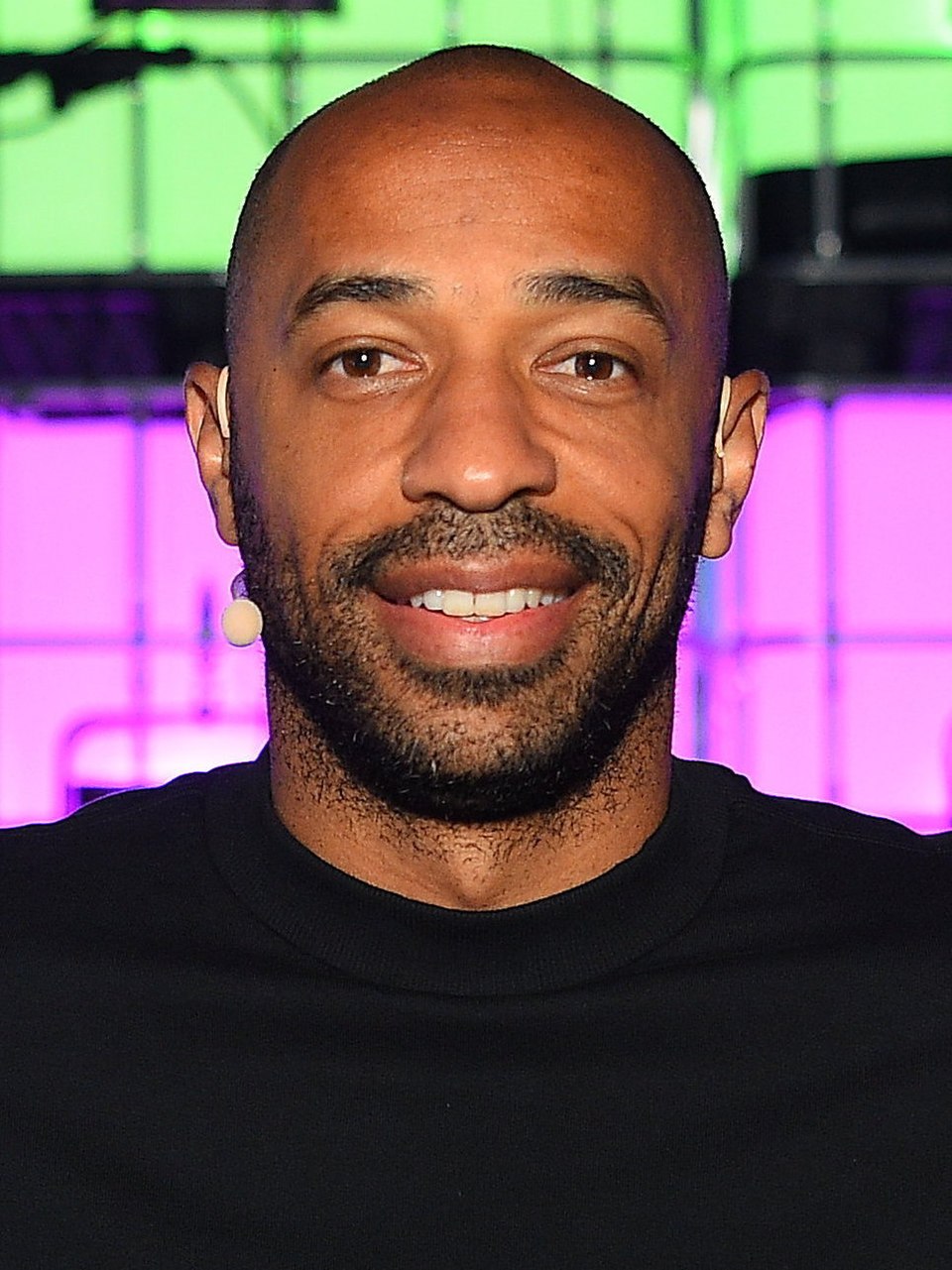
Thierry Henry: The Evolution of a Football Icon from Pitch Dominator to Sideline Strategist
Few names resonate with the sheer brilliance and elegance of football quite like Thierry Henry. From dazzling defenders with his blistering pace and clinical finishes to orchestrating attacks from the technical area, Henry's journey in the beautiful game is one of continuous evolution. Born on August 17, 1977, this 48-year-old French football coach has transcended his legendary playing career to carve out a new path, seeking to impart his invaluable experience and tactical acumen to a new generation. This article delves into the remarkable life and career of a man who remains a pivotal figure in football, exploring his rise as a player and his current endeavors as a respected coach.
The Making of a Legend: Thierry Henry's Formative Years
Thierry Henry's story began not on the grand stages of European football, but in the humble commune of Les Ulis, near Paris, France. His Antillean heritage, with father Antoine hailing from Guadeloupe and mother Maris from Martinique, infused a vibrant cultural backdrop to his upbringing. From a very young age, Henry displayed an undeniable connection with the ball, a talent fiercely nurtured by his father.
Antoine Henry was more than just a supportive parent; he was a driving force. He meticulously oversaw Thierry's diet, enrolled him in various clubs, and made immense sacrifices, even losing his job because he was late due to taking Thierry to training. This unwavering dedication proved instrumental, especially as young Thierry faced early challenges, including a congenital foot malformation, the divorce of his parents in 1985, and the playful teasing of his elder brother, Willie. His first coach, Claude Chezel, vividly recalled Antoine's passionate advocacy for his son, often clashing with referees and other parents if he felt Thierry was unfairly treated.
Henry honed his skills in youth teams like Yulys, Palaiseau, and Viry-Chatillon before earning a coveted spot at the elite Clairefontaine football center – France's renowned academy. It was here, during a match where he scored a remarkable six goals, that he caught the eye of Arnold Catalano, a manager for AS Monaco. At just 17, Henry joined Monaco's reserve team, marking the true beginning of his professional ascent. It was at Monaco that Henry first encountered Arsène Wenger, a mentor who would prove pivotal in his career, famously transitioning him from a winger to a potent striker, a decision that would redefine his playing style and ultimately, football itself.
A Prolific Playing Career: Records, Trophies, and the Missing Piece
Thierry Henry's playing career reads like a highlight reel of modern football. His five seasons with Monaco saw him achieve national success, including a league title and a Coupe de France, and even reach the Champions League semi-finals, a testament to his burgeoning talent. A brief and somewhat turbulent stint at Juventus followed, where he struggled to adapt to a new league and system, particularly when played out of position. However, it was his reunion with Arsène Wenger at Arsenal in 1999 that truly unleashed the "miracle of football" that Henry was destined to be.
At Arsenal, Henry blossomed into one of the most feared strikers in the world. His blend of speed, technique, and intelligence saw him rewrite the club's record books, becoming their all-time leading goalscorer. He was the talisman of "The Invincibles" squad that went an entire Premier League season unbeaten, securing multiple league titles and FA Cups. His move to Barcelona in 2007 brought him the elusive Champions League title, cementing his status as one of football's greats. He later graced the MLS with the New York Red Bulls and even made a memorable return to Arsenal on loan, proving his enduring class.
Henry's prowess wasn't confined to club football. He was a vital component of the French national team, winning the FIFA World Cup in 1998 and the UEFA European Championship in 2000. Across France, England, Spain, and even the USA, his name became synonymous with excellence. He accumulated over a dozen major titles, countless individual awards, and a slew of records that still stand today. Yet, for all his unparalleled achievements and individual brilliance, one major accolade famously eluded him: the Ballon d'Or. This absence remains a point of considerable debate among fans and pundits, a fascinating aspect of his legacy. For a deeper dive into this topic, you might be interested in Thierry Henry: Unpacking the Legend's Missing Ballon d'Or.
Insight for Aspiring Players: Henry's career demonstrates the importance of finding the right coach and system that complements your strengths. Wenger's decision to convert him to a striker was a game-changer, highlighting how tactical understanding can unlock a player's true potential.
The Tactical Mind Unveiled: Thierry Henry's Coaching Journey
The transition from a globally celebrated player to a football coach is a challenging path, often requiring a fundamental shift in perspective. For Thierry Henry, a player whose every move was scrutinized, stepping onto the sideline meant learning to observe, strategize, and communicate in an entirely new way. His coaching career officially began with roles in youth development and as an assistant before taking on senior management positions.
Henry gained valuable experience as an assistant coach for the Belgium national team under Roberto Martínez, contributing to their impressive third-place finish at the 2018 FIFA World Cup. This role provided him with crucial exposure to international management at the highest level, working with a star-studded squad and navigating complex tournament dynamics. He then took on the head coach role at his former club, AS Monaco, and later with MLS side CF Montreal, experiencing firsthand the pressures and intricacies of leading a team. His stints have also included working with France U21, demonstrating his commitment to developing young talent.
The skills required for coaching differ significantly from those of a player. While a player's focus is on individual performance and execution within a defined role, a coach must manage an entire squad, devise overarching strategies, motivate individuals, and adapt to myriad in-game scenarios. Henry, known for his tactical intelligence as a player, is now applying that same analytical approach to management. He is often seen as a coach who values attacking football, intelligent movement, and the technical prowess that defined his own playing style. His journey is a testament to the fact that greatness on the pitch doesn't automatically translate to coaching success, but it provides a unique foundation of experience and understanding. To explore more about his coaching trajectory and compare it with his playing statistics, you can refer to Thierry Henry: Unveiling His Player and Coach Career Stats.
Practical Tip for Aspiring Coaches: Learn from the best, even if it's as an assistant. Henry's time with Belgium and Roberto Martínez provided invaluable mentorship and exposure, accelerating his coaching education. It highlights that humility and a willingness to learn are crucial, regardless of past playing achievements.
Beyond the Pitch: Henry's Enduring Legacy and Future
At 48 years old, Thierry Henry's influence on football continues unabated. He is a frequent analyst and commentator, offering sharp insights into the modern game, and his presence on platforms like FotMob ensures fans can follow his coaching career with live match updates, detailed statistics, and comprehensive performance analytics. His global appeal extends beyond football, as evidenced by his appearances at events like Wimbledon, showcasing a well-rounded personality and broad interests.
Henry's legacy is twofold: that of an iconic player who redefined the striker's role and a burgeoning coach who is now shaping the next generation. As he continues to navigate the complexities of management, his journey promises to be as compelling and impactful as his playing days. Whether leading national teams or club sides, Henry’s deep understanding of the game, combined with his dedication to excellence, ensures his ongoing contribution to the world of football.
In conclusion, Thierry Henry's career is a masterclass in dedication, skill, and reinvention. From his humble beginnings in Les Ulis, overcoming early challenges to become a global superstar, to his current role as a respected coach, his narrative is one of unwavering commitment to football. As he continues to evolve in his coaching journey, the world watches with anticipation, eager to see the next chapter in the remarkable story of a true football icon.