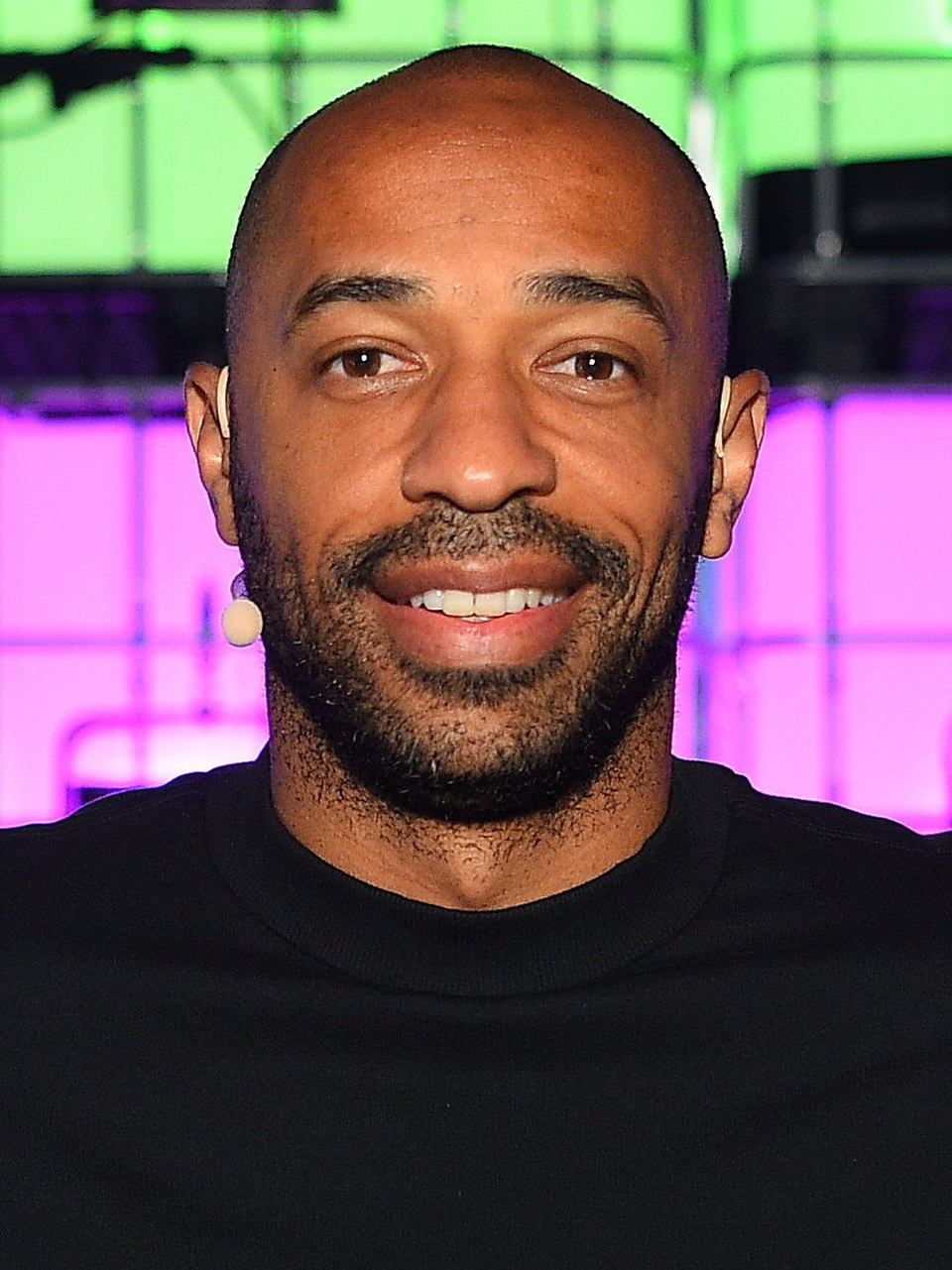
Thierry Henry: Unpacking the Legend's Missing Ballon d'Or
In the pantheon of footballing greats, few names evoke as much awe, admiration, and a touch of wistful debate as Thierry Henry. A player of unparalleled grace, electrifying pace, and a killer instinct in front of goal, Henry carved out a career replete with team trophies, individual accolades, and countless iconic moments. Yet, despite his undeniable brilliance across multiple leagues and on the international stage, one major individual honour conspicuously eludes his packed trophy cabinet: the coveted Ballon d'Or. This absence remains a persistent talking point among fans and pundits, prompting a deeper look into the career of a true footballing miracle.
The Formative Years: From Les Ulis to Monaco's Prodigy
Born on August 17, 1977, in Les Ulis, a commune near Paris, Thierry Daniel Henry's journey to football superstardom was fueled by a potent blend of raw talent, unwavering dedication, and the relentless support of his father, Antoine. Hailing from Antillean descent – his father Guadeloupean, his mother Martiniquais – Henry's early life was marked by challenges, including a congenital foot malformation and his parents' divorce in 1985. However, none of these obstacles deterred his progression.
Antoine Henry was the architect of his son's early career, ensuring rigorous training, strict dietary adherence, and entry into various local clubs such as Yulys, Palaiseau, and Viry-Chatillon. His commitment was so profound that he once lost his job due to consistently being late because of Thierry's training schedule. Coaches like Claude Chezel quickly recognized the young boy's immense potential, often witnessing Antoine fiercely advocate for his son, challenging referees and other parents if he felt Thierry was unfairly treated. This fierce protection and belief eventually led Henry to the elite Clairefontaine football academy, France's national football centre known for nurturing future stars.
It was at Clairefontaine, after a six-goal masterclass in a single match, that Thierry Henry caught the eye of Arnold Catalano, manager of AS Monaco. At just 17, Henry joined the Monaco reserve team, marking the true beginning of his professional career. It was here that he forged a pivotal relationship with manager Arsène Wenger, who would become the most influential figure in his development. Wenger, recognizing Henry's blistering speed and technical prowess, made a career-defining decision to transition him from a wide midfielder to a central striker – a tactical switch that would unlock Henry's full potential and redefine his playing style. Over five seasons with Monaco, Henry flourished, leading the team to a national championship victory, a French Cup, and a memorable run to the Champions League semi-finals, narrowly missing out against Alex Ferguson's Manchester United.
A brief, somewhat tumultuous stint at Juventus followed, where Henry struggled to adapt to Italian football after a controversial attempt by his father to secure a move to Real Madrid while still under contract with Monaco. Though the Real Madrid deal fell through and resulted in a FIFA fine, these early experiences, both positive and challenging, forged the resilient and adaptable player Henry would become.
Reigning Supreme: Arsenal and Barcelona Dominance
The true apotheosis of Thierry Henry's playing career arrived with his reunion with Arsène Wenger at Arsenal in 1999. In North London, he wasn't just a player; he became "King Henry." Under Wenger's tutelage, Henry transformed into the most feared striker in the Premier League. His blend of raw speed, sublime dribbling, exquisite finishing, and surprising strength made him virtually unplayable. He regularly topped the scoring charts, winning four Premier League Golden Boots and becoming Arsenal's all-time leading goal scorer with 228 goals across all competitions.
Henry was the talisman of Arsenal's "Invincibles" team, who famously went an entire 2003-04 Premier League season undefeated, etching their names into football folklore. His time at Arsenal was also decorated with two Premier League titles and two FA Cups, showcasing his ability to deliver individual brilliance within a highly successful team framework.
In 2007, seeking the ultimate club prize, the UEFA Champions League, Henry made a high-profile move to Barcelona. This was a testament to his ambition and willingness to step out of his comfort zone. At Barcelona, he adapted his game, often playing from the left wing alongside Lionel Messi and Samuel Eto'o, proving his versatility and commitment to team success. His spell at Camp Nou was incredibly fruitful, culminating in a historic treble in the 2008-09 season under Pep Guardiola, securing the Champions League, La Liga, and Copa del Rey. This period solidified his status as one of the few players to have conquered multiple top European leagues and lifted Europe's most coveted club trophy. For a deeper dive into his remarkable on-field achievements, you can explore Thierry Henry: Unveiling His Player and Coach Career Stats.
The Ballon d'Or Conundrum: A Legacy Overshadowed?
Despite his extraordinary individual statistics, numerous team trophies, and a style of play that captivated millions, the Ballon d'Or remained elusive for Thierry Henry. This is perhaps the most glaring omission in an otherwise perfect career narrative. Henry was consistently among the top contenders during his peak years, particularly in 2003 and 2004.
In 2003, after a phenomenal season with Arsenal where he scored 32 goals in all competitions, leading them to an FA Cup and finishing second in the league, Henry was widely considered the favourite. However, the award controversially went to Juventus midfielder Pavel Nedvěd, whose team had reached the Champions League final and won Serie A. Similarly, in 2004, another stellar season saw Henry finish fourth, with Andriy Shevchenko taking home the honour.
The question then arises: why did Thierry Henry never win the Ballon d'Or?
- Intense Competition: Henry played in an era brimming with generational talents. His peak coincided with the dominance of players like Ronaldo (Nazário), Zinedine Zidane, Ronaldinho, Kaká, and later Cristiano Ronaldo and Lionel Messi. To win the Ballon d'Or often requires a player to not just be individually brilliant but also to have led their team to a major trophy, ideally the Champions League or a World Cup/European Championship, in that specific calendar year.
- Team Success vs. Individual Narrative: While Henry had incredible individual seasons, the Ballon d'Or narrative often leans heavily on the defining team success of the winner. In years when he was individually exceptional, his teams might have fallen short in the biggest competitions at crucial junctures.
- Voter Fatigue or Perception: It's possible that despite his consistent brilliance, voters occasionally sought a fresh face or a player who had a more "complete" trophy haul in a particular year.
Does its absence diminish his legacy? For many, the answer is a resounding no. Henry's impact on the game, his unique style, and his sustained excellence over more than a decade speak volumes. He's widely regarded as one of the Premier League's greatest players, and indeed, one of the finest forwards of his generation, irrespective of individual accolades.
Beyond the Trophy: Henry's Enduring Impact
While the Ballon d'Or remains the elephant in the room for many discussions about Thierry Henry, his influence extends far beyond individual awards. He redefined the striker role, inspiring a generation of attackers with his ability to score from anywhere, his elegant dribbling, and his intelligent movement. His career also saw him represent France with distinction, participating in multiple World Cups and European Championships, winning the 1998 World Cup and Euro 2000 – proving his mettle on the biggest international stages.
After conquering European football, Henry embarked on a new adventure in Major League Soccer (MLS) with the New York Red Bulls, even featuring for the MLS All-Stars. His presence in the USA helped elevate the sport's profile, demonstrating his global appeal and commitment to football's growth even in markets where it isn't as dominant as in Europe. This move underscored his status as a global icon, a "miracle of football" recognized across French, English, Spanish, and even American football landscapes.
Post-retirement from playing, Henry seamlessly transitioned into a respected football coach and insightful pundit. His articulate analysis and deep understanding of the game made him a sought-after voice on television, particularly with Sky Sports. His coaching journey has taken him through various roles, including assistant manager for the Belgian national team, head coach at CF Montreal, and a return to Monaco as a coach, as well as working with France U21. His career trajectory from iconic player to respected coach is a testament to his enduring passion for the beautiful game. Learn more about his evolution in Thierry Henry: From Iconic Player to Respected Coach.
Off the pitch, Henry has maintained a reputation for being well-dressed and carrying himself with an air of sophistication, even being spotted attending prestigious events like Wimbledon, showcasing his broad appeal and persona beyond the football pitch.
In conclusion, Thierry Henry's career is a masterclass in footballing excellence. While the absence of a Ballon d'Or might forever spark debate, it pales in comparison to the vast tapestry of his achievements, his revolutionary style of play, and the indelible mark he left on the sport. He is, without doubt, one of football's true legends, whose legacy is defined not by a single golden ball, but by the countless moments of magic he delivered and the inspiration he continues to provide to fans and aspiring footballers worldwide.